
Dearest Iowa, Do you like getting cancer?
Or maybe you just hate clean water?

Or maybe the better question is, “Do you really like it when there is shit in your own nest?”
Would you prefer clean water, or would it be better if Iowa’s Government just kept contaminated, dirty water a secret? Then, no news, no worries!
SECRETS are a good way to avoid solving problems. If you don’t know what is happening, why worry?
If clean water is your preference, how about calling your state legislator? Ask for a NO vote on File 2530.
This NO vote would be a good start to put Iowa on a new track toward protecting its water and its people’s health. The new path would begin to make Iowa healthier. I challenge you to remember how various “wrong road” changes led to where we are now.
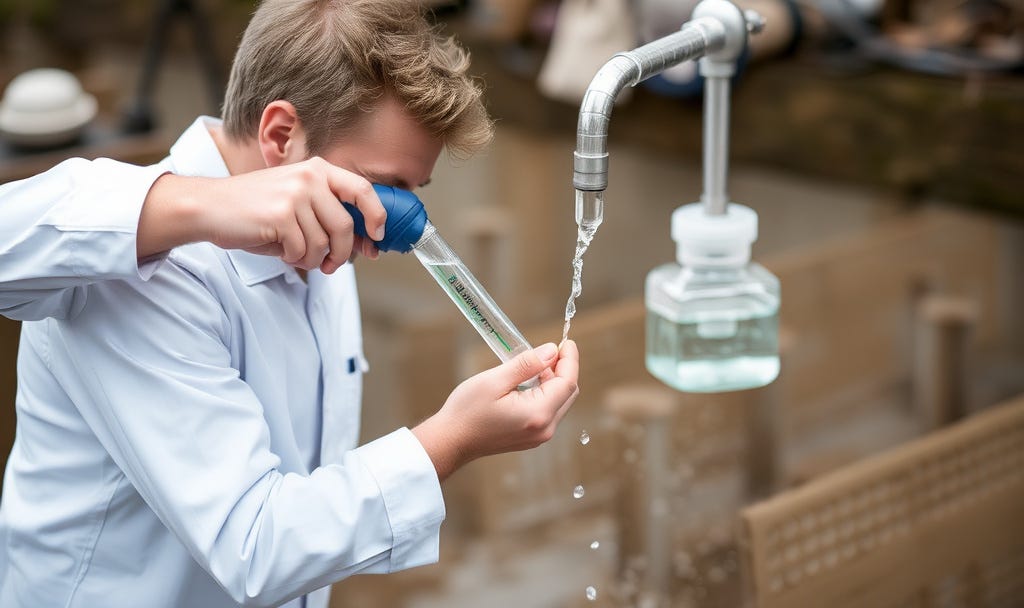
Once upon a time, testing a farmer’s well water was simple. Drinkable — yes, easy. Not drinkable — oh, just check; maybe a brick slipped loose in the well. Fix it, and all was well.
But now, things are different. First, the USDA attempted to address the increasing problem of contaminated, “dirty” water by establishing rural water systems. That worked for a time, but in addition to ensuring the water was clean, it also served as a big cover-up … our rural water was often no longer fit to drink. Oh! Problem solved.
Of course, now we know that Iowa’s water is contaminated everywhere — too much livestock feces. More and more chemicals have also joined the “dirty water” party.
In the beginning, USDA’s Extension Services taught classes on the use of farm chemicals. I was a farmer back then, and I remember when my husband came home … excited about herbicides! “Now, we won’t have to spend so much time cultivating to get rid of those weeds … not so many trips across the field.”
I asked… I thought that turning the weeds back into the ground helped rebuild the soil?
“Oh, that doesn’t matter,” was the answer. This was lots of farmers’ answers, not just his.
Decades later, we know that when we don’t rebuild the soil, it shrinks and doesn’t hold water well over time. We can almost see some of it turning into clay. The depth of our treasured black topsoil is less than half what it used to be, and much of it is washing downriver to New Orleans.
The water quality problems escalated — ever-larger animal-concentration operations, more chemicals, rising nitrogen/ammonia levels, bigger tractors, and expanded land-use rules. Iowa farmers have mostly followed the USDA’s instructions. However, the USDA doesn’t pay much attention to these growing agricultural challenges.
Now, reality shows that the USDA doesn't want to admit that large animal operations, chemicals, and nitrogen/ammonia are harming the land, water, and our health.
Another way to see this is to connect the dangerous dots. One “dot” is File 2530.
The bill would triple the cost of initial testing and complicate the blame game with species testing, all of which are exactly the bill’s purpose. Hide the “dirty water” problem, and no one needs to worry, or take responsibility.
Another dangerous “dot” involves Parkinson's disease and Monsanto. When Monsanto wanted to sell out to Bayer, a German company, the sale meant that Bayer became liable for Monsanto’s mistakes, including the ongoing lawsuits about how Parkinson’s liabilities transferred to Bayer. You may remember that USDA rushed the approval — whatever Monsanto wants, Monsanto gets!
That settlement is ongoing. Syngeta has settled, but the story behind it — denial, secrets, delays, more denial — could be compared to File 2530 that seeks to keep dangerous E. coli a secret as long as possible.
Denial … Secrets … Delays … More Denial — anything but deal with reality!
Iowa’s big hog concentration systems’ owners want to solve the problems of excess animal waste by keeping all the kinds of contamination a secret from those of us who drink or swim in the contaminated water. If you don’t know about it, it’s one less thing to worry about until cancer hits you in the face. Here’s the language:
The department (Iowa DNR) shall not place any water of the state on a section303(d) list based on levels of fecal indicator bacteria until the department conducts an analysis, which may include using microbial source tracking, to designate by percentage each species of animal, if any, that has contributed to the impairment.
The primary sponsor of the bill is Heather Hora, who is from Washington County in Southeast Iowa. The county has more hogs than any other county in Iowa. She and her husband raise hogs near Washington.
Ms. Hora and her bill serve as a perfect example of how people with a conflict of interest choose to shit in our nests in order to feather their own nests.
We worry about how that happens in Congress, but it also happens right here in Iowa.
Ms. Hora is a perfect example of using her office to promote her special interest — this time, protecting animal feces in our water 💦. She should admit she is compromised and withdraw. She won/t and she could win if we don’t pay attention.
Call your state legislators and tell them to vote NO! on FILE 2530.